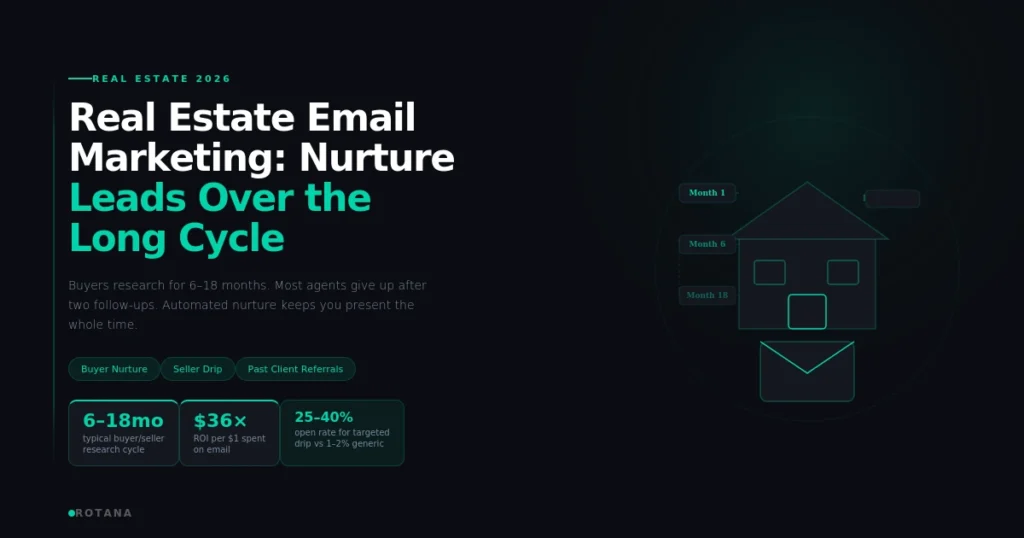
Real estate email marketing is the use of automated, segmented email to nurture buyer and seller leads across a sales cycle that runs months or years, then to keep past clients sending referrals. It fits the business better than almost any channel. A buyer might research for fourteen months before they transact. Email is the only affordable way to stay present that whole time. It also returns around $36 for every $1 spent, the highest-ROI channel available to agents in 2026.
I build email as a system. Real estate is a patience game. Most agents follow up once or twice, then move on. The lead that goes quiet in week one is often ready in month six. This guide covers the drip campaigns that win those leads, the segmentation that makes them work and the data behind it.
Why email fits real estate so well
The cycle is long, so presence wins
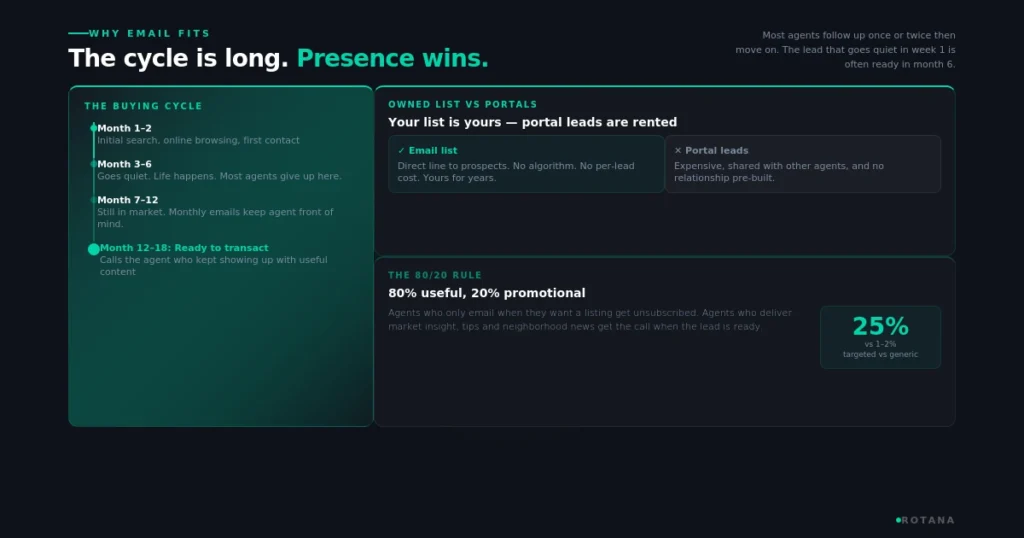
Real estate buying cycles run 6 to 18 months. Buyers and sellers research quietly, then act when life forces the move. Most agents give up far too early. Automated nurture keeps you in front of a lead through that long window without manual effort, so you are the agent they call when they are finally ready.
An owned list beats the portals
Leads from portals and ads are rented and expensive. Your email list is yours, a direct line that does not depend on an algorithm or an ad budget. The same relationship-led logic drives trust-based fields like email marketing for financial advisors, where decisions also unfold slowly over months.
The 80/20 rule of real estate email
Lead with value, not listings
Good real estate email is roughly 80% useful and 20% promotional. Agents who only email when they want a listing get unsubscribed. The ones who show up monthly with market insight, neighborhood news or home-maintenance tips get the call. Value first earns the right to ask later.
Why relevance beats frequency
Unsegmented blasts to a full database produce 1% to 2% open rates. Targeted drip sequences organized by lead type reach 25% to 40%. The difference is relevance. A buyer who just toured a home needs entirely different email from a past client of three years or a seller you spoke to last week.
The drip campaigns that convert
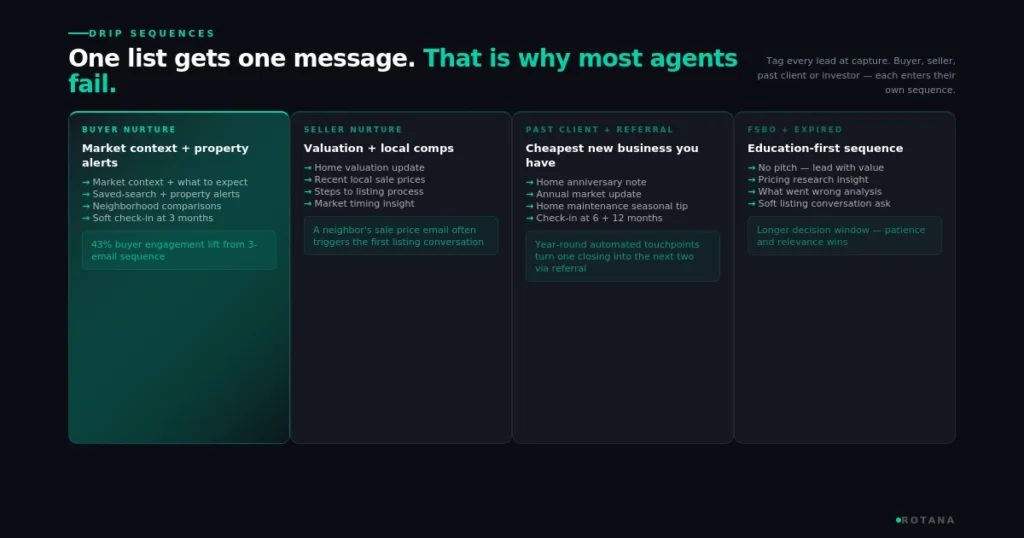
A real estate program runs on segmented sequences, not one list getting one message.
The buyer nurture sequence
A buyer sequence educates someone through the purchase step by step, mixing market context with saved-search and property alerts. Short, well-timed sequences outperform manual follow-up. One documented three-email sequence produced a 43% lift in buyer engagement with zero unsubscribes, which shows that relevance keeps people subscribed rather than driving them away.
The seller nurture sequence
Sellers need different content: home valuation, local sale prices, the steps to list. A market update showing a neighbor’s sale price is often the trigger that starts the conversation. Segment sellers apart from buyers, since their questions and timing differ completely.
The past-client and referral sequence
Past clients are your cheapest source of new business. A home-anniversary note, a “still loving the place?” check-in or an annual market update keeps you warm and referrals flowing. Year-round automated touchpoints turn one closing into the next two through referral.
The lead-source sequences
Different lead types convert differently, so build dedicated drips. For-sale-by-owner and expired-listing leads need an education-first sequence over their longer decision window. Matching the sequence to the lead source lifts conversion well above a generic catch-all drip. The broader system behind this sits in my guide to email marketing lead generation.
Build the list the right way
Capture and tag every lead by type
Permission powers the whole system. Capture leads through your site, IDX search, open houses and referrals, then tag each one by type at the point of capture: buyer, seller, past client, investor. That tag decides which sequence they enter. Clean tagging is what makes relevant nurture possible.
Feed email from a real CRM
Agents accumulate thousands of contacts over a career. A real estate CRM connected to your email tool keeps that database segmented and lets sequences trigger on behavior, like a past client browsing listings again. The stack matters less than the discipline of tagging and nurturing every contact.
Write real estate emails that get replies
Personalize by stage and area
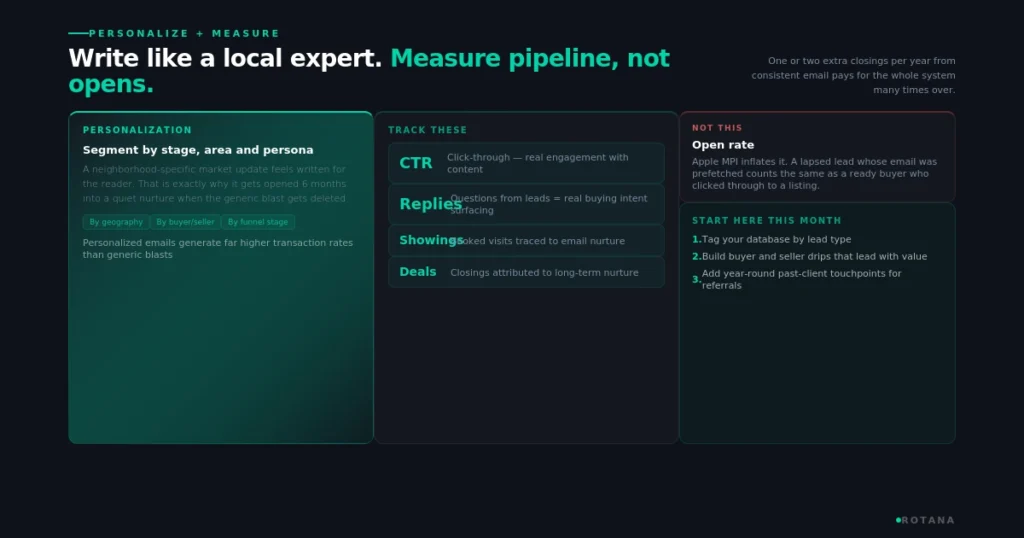
Personalized emails generate far higher transaction rates than generic ones. Segment by geography, buyer or seller persona and funnel stage. A neighborhood-specific market update feels written for the reader, which is exactly why it gets opened months into a quiet nurture.
Keep it human and useful
Write like a helpful local expert, not a billboard. One clear idea per email, one next step, real market detail the reader cannot get elsewhere. When they are ready to transact, you want to be the helpful agent they remember, not the salesy one they muted.
Measure pipeline, not opens
Apple’s Mail Privacy Protection inflates open rates, so treat them as directional. Track click-through rate, replies, showings booked and deals traced back to nurture. One or two extra closings a year from consistent email pays for the whole system many times over.
What I would do first
If you are an agent starting fresh, do three things this month. Tag your database by lead type so the right people get the right sequence. Build a buyer nurture and a seller nurture drip that lead with value. Add a past-client touchpoint that runs all year for referrals. Then watch replies and showings rather than opens.
Real estate email rewards patience and relevance over volume. The agent who shows up monthly with something genuinely useful wins the lead that went quiet for a year. If you want that nurture system built and automated to your CRM, that is the work I do at Rotana through our cold email and drip campaign service. Book a call through the link on the site.
Frequently asked questions
Does email marketing work for real estate agents?
Yes, it is the highest-ROI channel available to agents, returning around $36 for every $1 spent. It also converts notably better than social media for real estate. Its real strength is the long buying cycle. Since buyers and sellers often research for 6 to 18 months, automated nurture keeps an agent present until the lead is ready, which is when most agents have already given up.
How often should a real estate agent email their list?
Consistency matters more than frequency. A monthly market update or newsletter keeps you top of mind across long decision cycles, with behavior-triggered drips running on top for active leads. The content should be roughly 80% useful and 20% promotional, since agents who only email to ask for a listing get unsubscribed while those who deliver value get the call.
What should real estate nurture emails contain?
Lead with value: local market insight, neighborhood updates, home-maintenance tips and saved-search alerts, with the ask kept light. Segment by lead type so buyers, sellers and past clients each get relevant content. Targeted sequences organized by lead type reach 25% to 40% open rates against 1% to 2% for generic blasts, so relevance is the whole game.
How do I nurture real estate leads that go cold?
Use automated long-term drip sequences rather than one or two manual follow-ups. A lead that does not reply in week one may be ready in month six, so the system has to keep showing up with useful content for months. Behavior triggers help too, such as re-engaging a past client when they start browsing listings again. Patience and relevance recover leads most agents abandon.
What is the best email approach for past clients?
Treat past clients as your top referral source with year-round automated touchpoints: home-anniversary notes, annual market updates and simple check-ins. These keep you warm without manual effort and prompt referrals when someone in their circle needs an agent. Personalization helps, since a message tied to their home or neighborhood feels genuine rather than mass-sent.