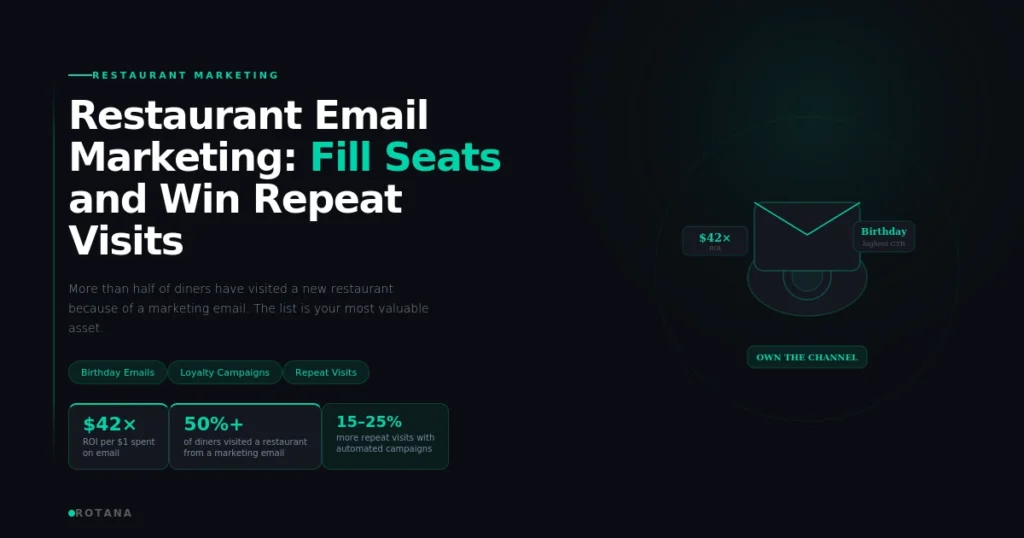
Restaurant email marketing is the use of permission-based email to bring guests back, promote events and turn one-time diners into regulars. It is one of the highest-return tools a restaurant has, returning around $42 for every $1 spent. More than half of diners say they have visited a new restaurant because of a marketing email. For a business built on repeat visits and thin margins, the email list is the single most valuable asset you own.
I treat email as a revenue system. For restaurants the system is simple: turn a good meal into a reason to come back. Social followers are rented and the algorithm decides who sees you. Your email list is yours. This guide covers the campaigns that fill seats, the data behind them and how to build the list in the first place.
Why email works for restaurants
Repeat visits are the whole game
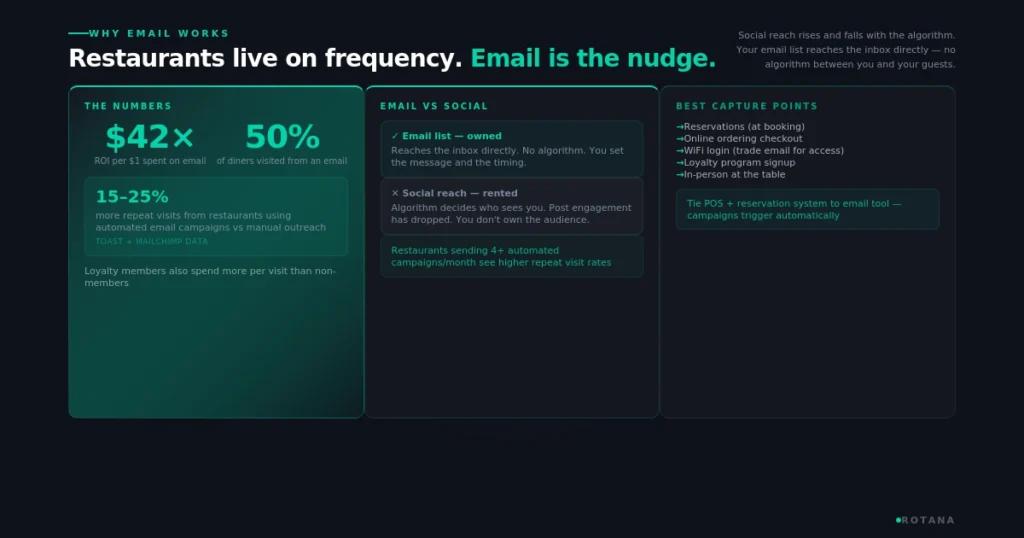
Restaurants live on frequency. A guest who comes monthly is worth far more than a one-time visitor. Loyalty members also spend more per visit than non-members. Email is the cheapest way to nudge that next visit. Restaurants using automated email campaigns generate 15% to 25% more repeat visits than manual outreach, per Toast and Mailchimp data.
An owned channel beats rented reach
Social reach rises and falls with the algorithm. Your email list reaches the inbox directly. For a local business competing on relationships, owning the channel that carries those relationships matters more than chasing followers. The same ownership logic drives my guide to ecommerce email marketing, where the list is the retention engine.
The campaigns that fill seats
A restaurant email program runs on a few dependable campaigns rather than the occasional blast.
The welcome and first-visit offer
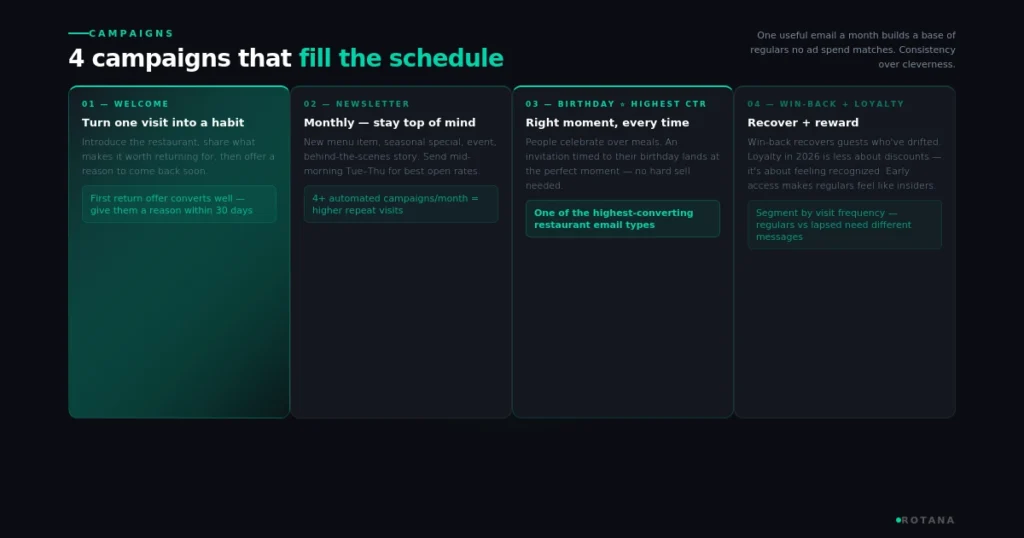
When a guest joins your list, a welcome email sets the relationship. Introduce the place, share what makes it worth returning for, then offer a reason to come back soon. This turns a single visit into the start of a habit.
The regular newsletter
A monthly or bi-weekly newsletter keeps you top of mind. Lead with something worth opening: a new menu item, a seasonal special, an event, a behind-the-scenes story. Restaurants that send at least four automated campaigns a month see meaningfully higher repeat visits, per industry data. Consistency keeps you in the consideration set for the next night out.
Birthday and milestone emails
A birthday offer is one of the highest-converting restaurant emails. People celebrate over meals, so an invitation timed to their birthday lands at the perfect moment. Anniversary and “we miss you” notes do similar work, prompting a visit without a hard sell.
Win-back and loyalty campaigns
A win-back email recovers guests who have not visited in a while. Loyalty updates reward your regulars and deepen the relationship, since 2026 loyalty is less about discounts and more about feeling recognized. Early access to specials or invites to events makes regulars feel like insiders.
Build the list the right way
Capture email at real touchpoints
Build the list from genuine guest moments. Collect email at reservations, online orders, loyalty signups and in person. WiFi signup is a strong capture point, since guests trade an email for the connection. Tie the list to your point-of-sale and reservation systems so guest data stays current and campaigns can trigger automatically.
Never buy a list
A purchased list of strangers in your area wrecks deliverability and breaks platform terms. Worse, it has no relationship with your restaurant. Build from people who have actually walked through the door. A smaller list of real guests outperforms a large cold one.
Write restaurant emails that get opened
Segment by visit behavior
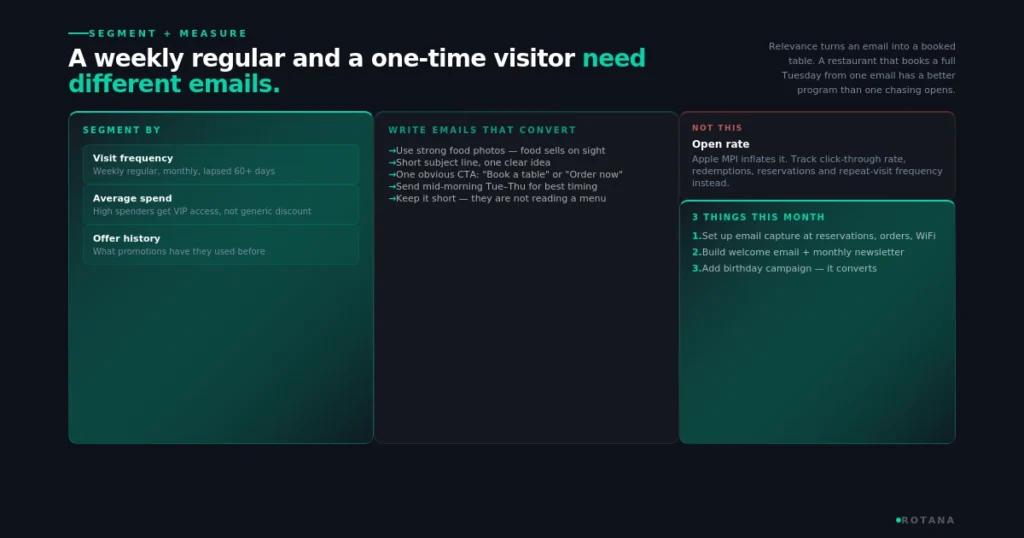
A weekly regular and a one-time visitor need different messages. Segment by visit frequency, spend and the offers a guest has used. Loyalty members can get tailored rewards based on their history. Relevance turns an email into a booked table. The same segment-first discipline drives my guide to email marketing lead generation.
Make it visual and simple
Food sells on sight. Use strong photos, a short subject line, one clear idea and one obvious next step, usually “book a table” or “order now.” Send at the right time too, since mid-morning on Tuesday through Thursday tends to earn the best opens for restaurants.
Measure visits, not opens
Open rate is inflated by Apple’s Mail Privacy Protection. Track click-through rate, redemptions, reservations and repeat-visit frequency. A restaurant that books a full Tuesday from one email has a better program than one chasing opens.
What I would do first
If you run a restaurant and you are starting fresh, do three things this month. Set up email capture at reservations, online orders and your WiFi login. Build a welcome email with a first-return offer plus a monthly newsletter. Add a birthday campaign, since it converts. Then watch reservations and redemptions rather than opens.
Email rewards consistency over cleverness. The restaurant that sends one genuinely useful email a month builds a base of regulars no ad spend matches. If you want that system built and automated to your point-of-sale, that is the work I do at Rotana through our cold email and drip campaign service. Book a call through the link on the site.
Frequently asked questions
Does email marketing work for restaurants?
Yes, it is one of the highest-return channels available, returning around $42 for every $1 spent. More than half of diners report visiting a new restaurant because of a marketing email. Automated campaigns generate 15% to 25% more repeat visits than manual outreach. Because the email list is owned rather than rented, it reaches guests directly without depending on a social algorithm.
How do restaurants collect customer email addresses?
Capture email at real guest touchpoints: reservations, online orders, loyalty signups, WiFi logins and in person at the table. Tying your point-of-sale and reservation systems to your email tool keeps guest data current and lets campaigns trigger automatically. Buying a list is a mistake, since those contacts have no relationship with your restaurant and harm deliverability.
What email campaigns should a restaurant send?
The core set is a welcome email with a first-return offer, a regular newsletter with menu and event news, a birthday campaign, plus win-back and loyalty messages. Birthday emails convert especially well since people celebrate over meals. Restaurants sending at least four automated campaigns a month tend to see meaningfully higher repeat visits.
How often should a restaurant send marketing emails?
Monthly or bi-weekly works for most restaurants, with automated campaigns like birthdays and win-backs running in the background on top. Industry data shows restaurants sending at least four automated emails a month see higher repeat visits. Mid-morning on Tuesday through Thursday tends to produce the best open rates, so timing matters as much as frequency.
Is email or SMS better for restaurants?
Both, used for different jobs. SMS has very high open rates and suits time-sensitive, same-day promotions. Email works better for visual menu announcements, event promotion, loyalty updates and storytelling that needs more room. The strongest programs combine the two, using email for the relationship and SMS for urgency.