
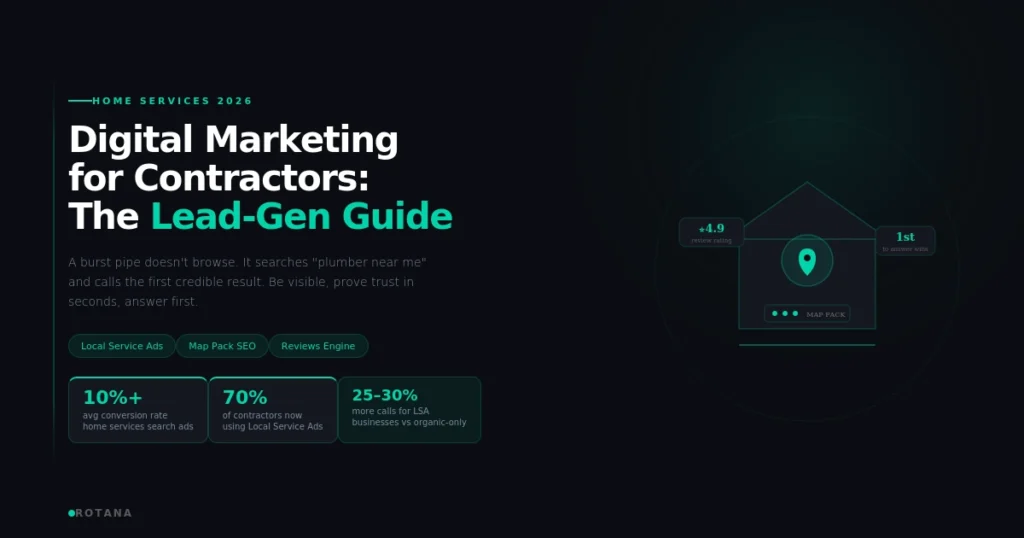
Digital marketing for contractors is the work of showing up at the top of local search when a homeowner needs a roof, a furnace or a remodel, then converting that high-intent search into a booked job. It is a local, urgency-driven game. Someone whose water heater just failed is not browsing. They are searching “plumber near me” and calling the first credible result. In 2026 the average conversion rate for home services search ads sits above 10%, which tells you how ready these searchers are to hire.
I run an SEO-led growth agency, so I know contractor marketing rewards a specific mix: be visible the instant someone searches, prove you are trustworthy in seconds and respond before a competitor does. The home services market is crowded. The contractors who thrive are not the ones spending the most. They are the ones running a system across paid lead channels, local search and reviews. This guide breaks that system down for roofers, HVAC companies, plumbers, electricians, remodelers and the trades around them.
Why contractor marketing is different
Urgency and locality drive everything
Most contractor searches carry urgency and a tight geographic radius. A homeowner with a burst pipe wants someone nearby who can come now. That behavior shapes every channel decision. You need to appear in the local results at the moment of need, load fast on mobile and make calling effortless. Speed to lead matters enormously, since a homeowner who reaches voicemail simply calls the next contractor on the list.
Seasonality shapes demand
Contractor demand swings with the seasons. HVAC spikes in the first heat wave and the first freeze. Roofing follows storms. Your marketing has to flex with that rhythm, scaling spend up before peak demand and shifting message during slow periods. Generic agencies that ignore seasonality waste budget. The contractors who plan campaigns around their demand calendar capture the surge instead of missing it.
Google Local Services Ads: the contractor’s best channel
Why LSAs fit contractors so well
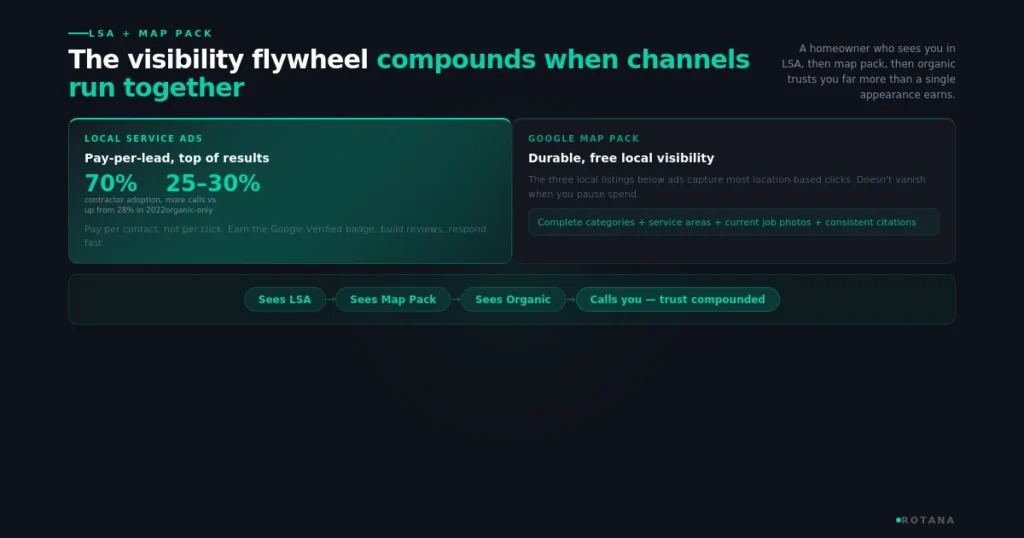
Google Local Services Ads sit at the very top of the results with your reviews, your service area and a tap-to-call button. They run on a pay-per-lead model, so you pay only when a customer contacts you directly, not for clicks that go nowhere. That makes them more predictable than traditional pay-per-click for most contractors. Adoption has surged from roughly 28% of contractors in 2022 to an estimated 70% by late 2025. Google’s own data shows LSA businesses get 25% to 30% more calls than those relying on organic listings alone.
How to win with LSAs
Success with LSAs comes down to a few disciplines. Earn the Google Verified badge through clean verification. Build review volume, since reviews drive both ranking and trust in the ad itself. Respond fast, because responsiveness affects your placement and your conversion. Dispute leads that fall outside your targeting, since the platform allows it. One caution: LSAs are a paid channel, so if you turn them off the leads stop. Treat them as one layer in a multi-channel system, not your only source.
Local SEO and the Map Pack
Own the three-pack
Below the ads, the Google Map Pack shows three local listings that capture most location-based clicks. Ranking there is durable, lower-cost visibility that does not vanish when you pause spend. Your Google Business Profile is the engine: complete categories, accurate service areas, current photos of real jobs and consistent contact details across directories. For a contractor, the map pack is where a steady stream of free leads originates.
The visibility flywheel
The channels compound when they run together. A homeowner who sees your name in an LSA, then again in the map pack, then again in organic results trusts you far more than a single appearance earns. Running Google Ads alongside LSAs can even lift LSA performance, since Google rewards advertisers investing across channels. That overlap is what separates contractors who do fine from those who dominate a market. The broader lead mechanics sit in my guide to email marketing lead generation.
Reviews are a ranking and conversion factor
Why reviews carry double weight
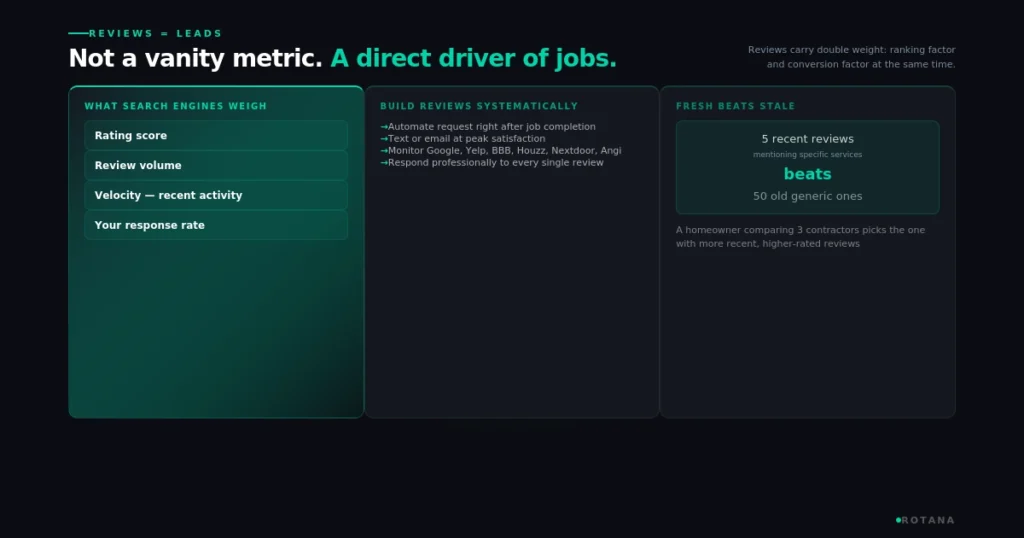
For contractors, reviews influence both whether you rank in local results and whether a homeowner chooses you. Search engines weigh rating score, review volume, velocity and your response rate when ranking local businesses and LSAs. A homeowner comparing three contractors usually picks the one with more recent, higher-rated reviews. Reviews are not a vanity metric in this trade. They are a direct driver of leads.
Build reviews systematically
Do not leave reviews to chance. Automate review requests by text or email right after a completed job, when satisfaction is highest. Monitor your presence across Google, Yelp, BBB, Houzz, Nextdoor and Angi, then respond professionally to every review, positive or negative. A steady flow of recent reviews mentioning specific services outperforms a stale pile of old ones, both for ranking and for trust.
Website and content that convert
A conversion-focused website
Your website has to turn a worried homeowner into a call. That means fast mobile load times, an obvious phone number and click-to-call button, clear service and service-area pages, plus trust signals like licensing, insurance and real project photos. Dedicated pages for each service and each city you serve help you rank for those specific searches and speak directly to that homeowner’s need.
Content that builds trust and rankings
Useful content earns organic traffic and reassures hesitant homeowners. Project breakdowns, seasonal maintenance tips, cost guides and plain-language answers to common questions all help. A “how much does a new roof cost in [city]” guide captures research-stage homeowners and feeds AI search answers. This content shows search engines your site is a credible local authority, which lifts your rankings over time.
Measure leads and jobs, not clicks
The point of contractor marketing is booked jobs, so measure what maps to them. Track cost per lead by channel, lead-to-booked-job conversion, average job value and return on ad spend. Use call tracking so you know which channel produced each call. Home service businesses that integrate paid search with local SEO and conversion optimization commonly report meaningful lead increases, but the only number that matters is profitable jobs. Watch where your best jobs actually come from, then put more budget there.
Build repeat business and referrals
Past customers are your cheapest leads
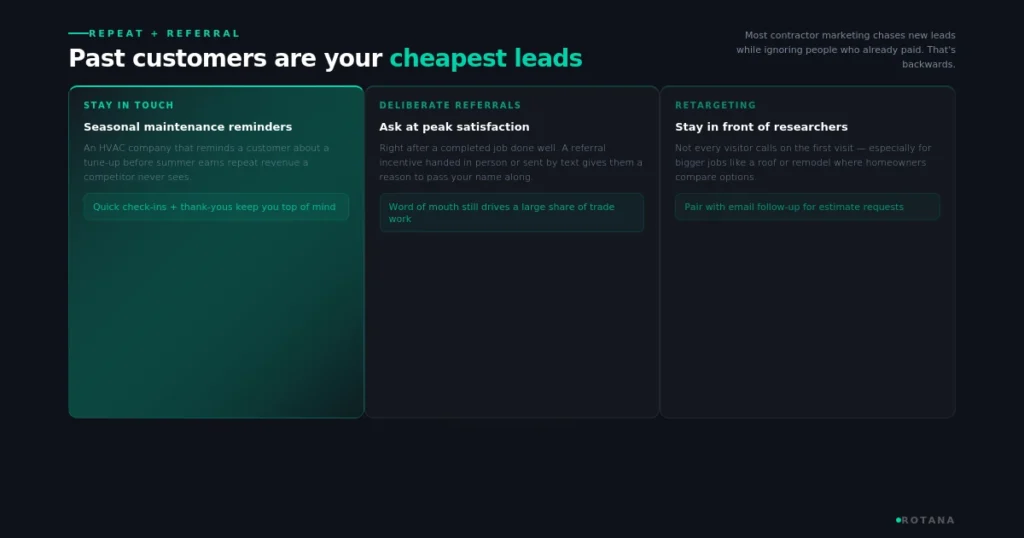
Most contractor marketing chases new leads while ignoring the people who already paid you. That is backwards. A homeowner who liked your work is the easiest sale you will ever make and the most likely to refer a neighbor. Stay in touch after the job with seasonal maintenance reminders, a quick check-in or a simple thank-you. An HVAC company that reminds a customer about a tune-up before summer earns repeat revenue a competitor never sees.
Turn happy customers into referral sources
Word of mouth still drives a large share of contractor work, so make referrals deliberate rather than accidental. Ask for them at the moment of highest satisfaction, right after a completed job done well. A simple referral incentive, handed over in person or sent by text, gives a happy customer a reason to pass your name along. Combined with the reviews those same customers leave, this builds a compounding source of trusted, low-cost leads.
Use retargeting to stay in front of researchers
Not every visitor calls on the first visit, especially for larger projects like a roof replacement or a remodel where homeowners compare options. Retargeting ads keep your name in front of people who visited your site but did not convert, which is one of the most cost-effective moves in contractor paid media. Pair it with email follow-up for anyone who requested an estimate, so a slow-deciding homeowner remembers you when they are finally ready.
What I would do first
If you run a contracting business and want more jobs, start in this order. Claim and fully optimize your Google Business Profile, then build a steady review habit with automated requests after each job. Launch Google Local Services Ads to capture pay-per-lead calls immediately. Make your website fast on mobile with obvious click-to-call. Add city and service pages for local SEO, then layer Google Ads during peak season. Fix response speed so no lead waits. Then track cost per booked job, not clicks.
Contractor marketing rewards the business that shows up first locally, proves trust through reviews and answers fast. The system beats the spend. If you want that system built and tuned to your trade and your market, that is the work I do at Rotana through our SEO consultancy service. The same urgency-and-local playbook drives my guide to criminal defense marketing, another field where speed and local visibility win. Book a call through the link on the site.
Frequently asked questions
What is the best way for contractors to get leads online?
The fastest, highest-intent channel for most contractors is Google Local Services Ads, which run on a pay-per-lead model and sit at the very top of results with reviews and a tap-to-call button. Pair them with local SEO to win the Google Map Pack for durable, lower-cost leads, plus a strong review habit since reviews drive both ranking and trust. The strongest results come from running these channels together rather than relying on any single one.
Are Google Local Services Ads worth it for contractors?
For most home service contractors, yes. They charge per lead rather than per click, which makes spend predictable. Google’s data shows LSA businesses get 25% to 30% more calls than those relying on organic listings alone. Adoption has surged toward 70% of contractors, so competition is rising. The keys are clean verification for the Google Verified badge, strong reviews, fast response times and disputing leads that fall outside your targeting.
How important are reviews for contractor marketing?
They are critical, because reviews influence both local search rankings and whether a homeowner chooses you. Search engines weigh rating score, review volume, velocity and response rate when ranking local businesses and Local Services Ads. A homeowner comparing contractors usually picks the one with more recent, higher-rated reviews. Automating review requests right after a completed job, then responding to every review, builds the steady flow that drives both ranking and conversions.
How does seasonality affect contractor marketing?
Demand for many trades swings sharply with the seasons, such as HVAC spiking in the first heat wave and freeze, with roofing rising after storms. Effective contractor marketing flexes with that rhythm, scaling ad spend up before peak demand and adjusting messaging during slower periods. Planning campaigns around your demand calendar lets you capture the surge instead of missing it, which generic agencies that ignore seasonality routinely fail to do.
How much should a contractor spend on digital marketing?
It depends on your trade, market competition and growth goals, so a fixed percentage is less useful than tracking cost per booked job. Local Services Ads and Google Ads can start producing leads quickly, while local SEO builds durable, lower-cost visibility over months. Use call tracking to see which channel produces your best jobs, then concentrate budget there. The measure that matters is profitable jobs booked, not clicks or impressions.