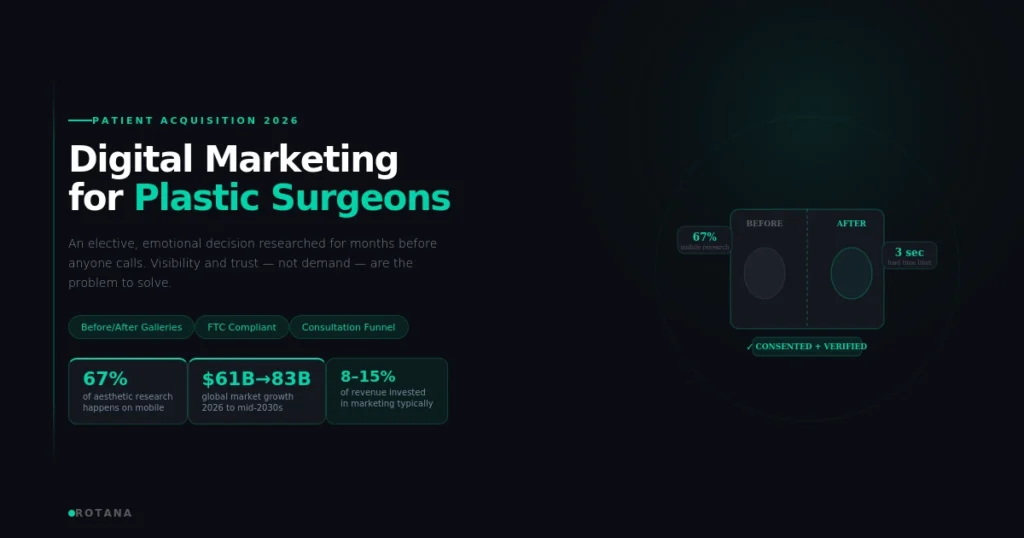
Digital marketing for plastic surgeons is the work of getting a practice found by people researching a procedure, then earning enough trust to turn that research into a booked consultation. It is different from almost any other kind of marketing. A cosmetic patient is the consumer and the decision-maker at once. The decision is elective and emotional. It often takes weeks or months of quiet research before anyone picks up the phone. In 2026, most of that research happens online, with roughly 67% of it on mobile.
I run an SEO-led growth agency, so I know aesthetic practices sit in a demanding spot: a fast-growing market with fierce competition and a layer of advertising rules most marketers never deal with. The global cosmetic surgery market is projected to climb from around $61 billion in 2026 toward $83 billion by the mid-2030s, so demand is not the problem. Visibility and trust are. This guide covers what actually drives consultations, plus the compliance lines you cannot cross. One note before we start: marketing should educate and build trust, never replace clinical advice. Always point patients toward a qualified surgeon for personalized guidance.
Why plastic surgery marketing is its own discipline
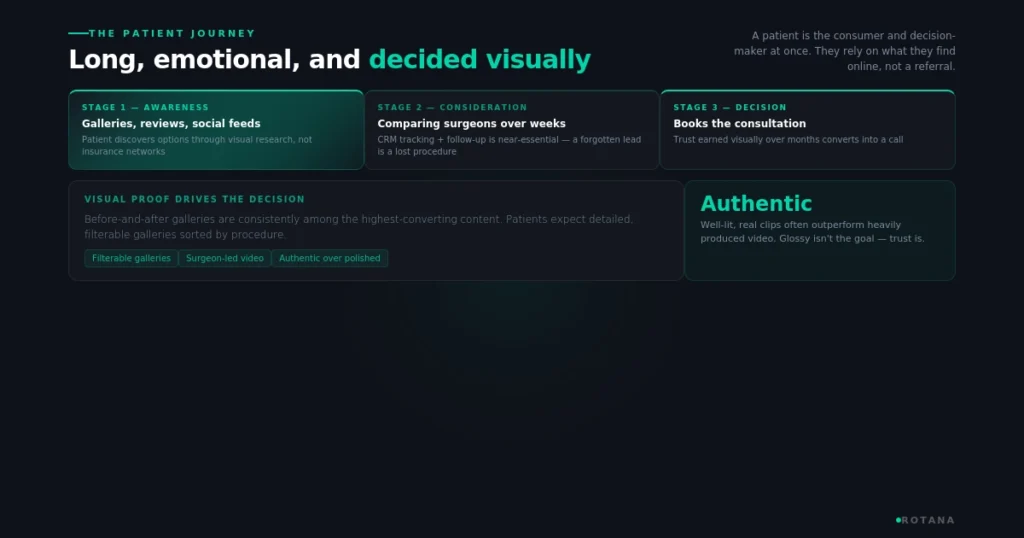
The patient journey is long and emotional
A patient choosing a cardiologist leans on insurance networks and physician referrals. A patient choosing a rhinoplasty surgeon relies on what they find online: galleries, reviews, social feeds and the surgeon’s own presence. The decision moves through awareness, then consideration as they compare surgeons, then a decision stage when they are ready to book. Each stage needs different messaging. Because the cycle runs months, a CRM that tracks every inquiry and automates follow-up is close to essential, since a forgotten lead is a lost procedure.
Visual proof drives the decision
Before-and-after galleries are consistently among the highest-converting content in this field, because they show results in a way words cannot. Patients in 2026 expect detailed, filterable galleries they can sort by procedure. Video matters just as much. It lets a prospective patient see the surgeon, the environment and real outcomes before they ever walk in. These do not need to be glossy productions. Authentic, well-lit clips often outperform heavily produced video. The catch is that every image and testimonial sits under advertising rules, which I cover below.
Build the digital foundation first
A fast, mobile, conversion-focused website
Your website is your around-the-clock consultation coordinator. Since about 67% of aesthetic research happens on mobile, speed and mobile design are not optional. A site that takes more than three seconds to load loses the patient to a competitor. The site should separate reconstructive from aesthetic procedures, label each procedure clearly, host retina-quality responsive galleries and make booking a consultation obvious on every page. Strong user experience has to lead to action, not just look polished.
Procedure-specific pages, not one generic page
Generic pages rarely convert in cosmetic surgery. A prospect researching a facelift wants a page about facelifts, with the process, recovery, candidacy and real results. Dedicated pages for rhinoplasty, breast augmentation, body contouring and non-surgical treatments each capture a different search and answer a different fear. This depth also feeds rankings, since search engines reward pages that fully satisfy a specific intent.
The channels that fill the consultation calendar
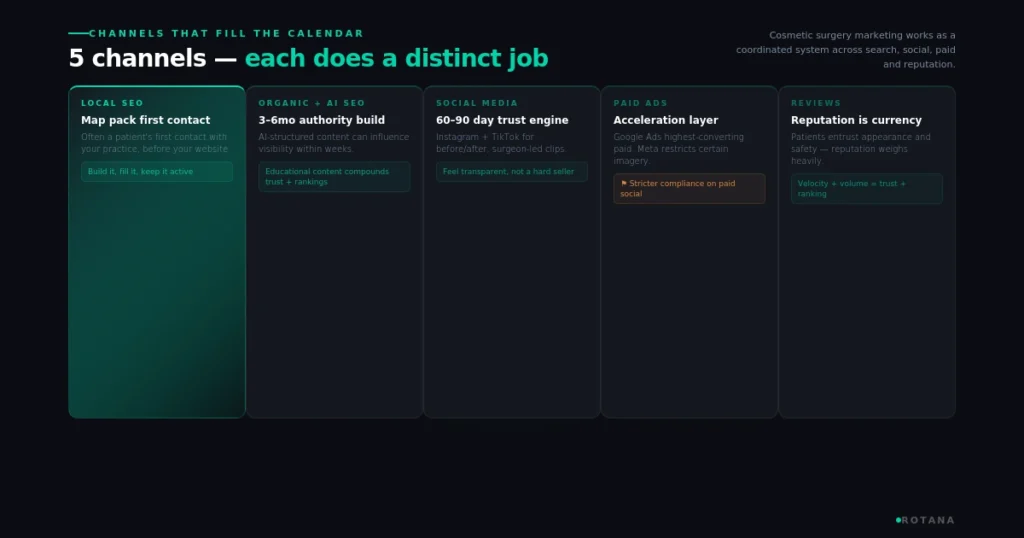
Cosmetic surgery marketing works as a coordinated system across search, social, paid and reputation. Each channel does a distinct job.
Local SEO and the map pack
Local SEO decides whether you appear when someone searches “facelift” or “breast augmentation surgeon near me.” The map pack, those three prominent listings above the regular results, captures the majority of clicks for location searches, so this is where patient acquisition often begins. A complete, optimized Google Business Profile is frequently a patient’s first contact with your practice, before they ever reach your website. Build it, fill it with current photos and keep it active.
Organic SEO and AI search visibility
Patients now research through Google and through AI tools that summarize and recommend providers. Authority-building SEO typically takes three to six months to mature, while structured content optimized for AI answers can influence visibility within weeks. Educational content on procedures, recovery and candidacy builds the trust that converts and earns rankings. The work compounds, which is the model I focus on through our SEO consultancy service.
Social media as the trust engine
For aesthetics, social platforms are where familiarity and trust form early. Instagram and TikTok suit before-and-after content, procedure explanations and short surgeon-led clips. Facebook supports educational posts and community engagement. Consistent, educational social posting builds a measurable consultation pipeline over roughly 60 to 90 days. The goal is to feel like a trusted, transparent expert, not a hard seller.
Paid advertising for acceleration
Organic strategies take time, so paid media accelerates acquisition when it is structured well. Google Ads remains the highest-converting paid channel, capturing high-intent searches like “cosmetic surgery consultation” in your area. Paid social adds reach and retargeting. The important caveat: Meta restricts certain cosmetic surgery imagery and idealized claims in paid ads, so paid placements demand stricter compliance than organic posts.
Reviews and reputation
In aesthetics, reputation is currency. Online reviews directly shape patient acquisition and long-term brand perception, since a patient is entrusting their appearance and safety to you. Encourage satisfied patients to leave honest reviews, respond to all of them professionally and treat review velocity and volume as both a trust signal and a local-ranking factor.
The compliance lines you cannot cross
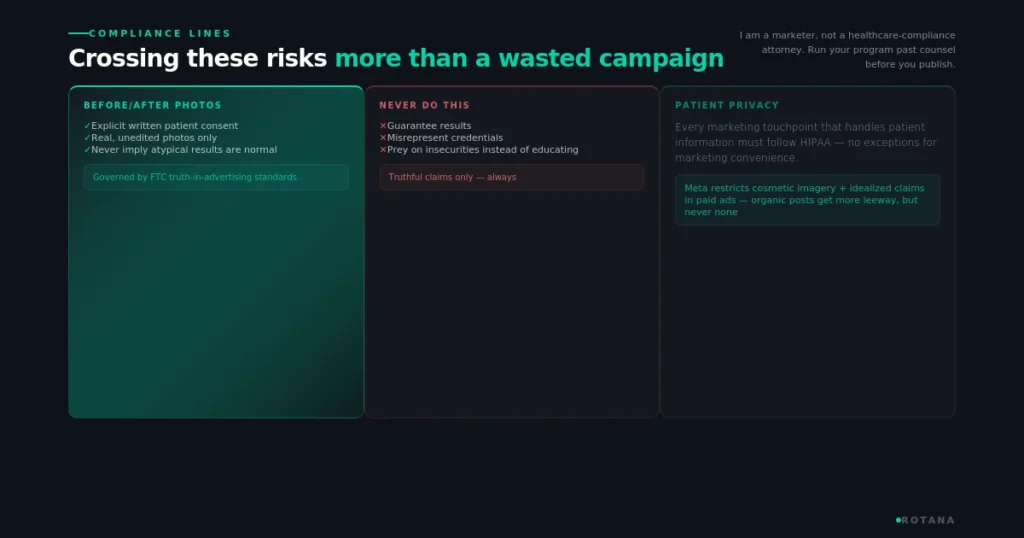
Aesthetic marketing carries regulatory nuance that generic healthcare marketing guides ignore. Crossing these lines risks more than a wasted campaign.
Before-and-after photos and testimonials
You can use before-and-after photos, but they fall under truth-in-advertising standards from the FTC and the guidance of bodies like professional plastic surgery associations. Use real patient photos with explicit written consent, never misleading edits. Testimonials must be genuine and representative. The rule of thumb: show real outcomes honestly, with documented consent, never implying a result is typical when it is not.
Truthful claims and patient privacy
Always be truthful in your claims, never guarantee results and represent your credentials accurately. Focus on educating and empowering patients rather than preying on insecurities. Patient privacy still applies, so every marketing touchpoint that handles patient information must protect it and follow HIPAA. A caveat on all of this: I am a marketer, not a healthcare-compliance attorney, so run your program past counsel who knows your jurisdiction before you publish.
Measure consultations, not vanity metrics
The most meaningful outcome is not website traffic or follower count. It is the number of qualified consultations booked and the share that convert to procedures. Track cost per consultation booked, consultation-to-procedure conversion rate, patient lifetime value by acquisition channel and, increasingly, your citation rate in AI search results. Practices in competitive markets typically invest 8% to 15% of revenue into marketing and plan for a 6-to-12-month horizon before full multi-channel returns appear. Average cost per lead varies so widely by procedure and geography that your own historical data matters far more than any industry benchmark.
Nurture the lead from inquiry to booked procedure
Most inquiries are not ready on day one
A cosmetic decision unfolds over weeks or months, so the patient who fills out your form today may not book for another two months. That gap is where most practices lose people. A lead that gets one call, then silence, drifts to a competitor who stayed in touch. The fix is a structured follow-up system that keeps you present and helpful through the whole consideration window without feeling pushy.
Use email and SMS to stay present
Email and SMS keep prospective patients engaged between the first inquiry and the booked consultation. Send genuinely useful messages: what to expect at a consultation, recovery realities, financing options, answers to the questions patients are too shy to ask. Each message should build confidence rather than pressure a decision. The same trust-first approach drives my work in regulated fields like healthcare, where the wrong tone does real damage.
Make the consultation itself convert
Marketing books the consultation. The consultation books the procedure. Treat that appointment as part of the funnel, since a great campaign wasted on a rushed, impersonal consultation converts poorly. Confirm appointments, reduce no-shows with reminders and make the in-person or virtual experience reflect the credibility your marketing promised. Alignment between what your marketing says and what the consultation delivers is what turns a qualified lead into a paying patient.
What I would do first
If you run an aesthetic practice and want more consultations, start in this order. Fix your website speed and mobile experience, then build dedicated, well-illustrated pages for your top procedures with compliant, consented galleries. Claim and fully optimize your Google Business Profile to win the local map pack. Start a consistent educational social presence and a steady, ethical review habit. Add Google Ads for immediate high-intent traffic once the foundation converts. Then measure consultations booked, not clicks.
Plastic surgery marketing rewards the practice that earns trust visually and ethically, shows up locally and nurtures a long decision with patience. The surgeons who win are not always the best-known. They are the ones who master the intersection of clinical credibility and digital visibility. If you want that system built, that is the work I do at Rotana. The same compliance-first approach runs through my guides to email marketing and dental email marketing. Book a call through the link on the site.
Frequently asked questions
How do plastic surgeons get more patients online?
The strongest path combines local SEO to win the Google map pack, procedure-specific pages with compliant before-and-after galleries, consistent educational social media and a steady review habit, with Google Ads added for immediate high-intent traffic. Because aesthetic decisions take weeks or months, a CRM that nurtures leads through follow-up is important too. The goal is to be visible during research and trusted enough to convert that research into a booked consultation.
Can plastic surgeons use before-and-after photos in marketing?
Yes, but under strict conditions. Before-and-after images fall under FTC truth-in-advertising standards and professional association guidance. You need explicit written patient consent, real unedited photos and honest representation that does not imply atypical results are normal. On paid social, platforms like Meta restrict certain cosmetic imagery and idealized claims, so paid placements require stricter compliance than organic posts. Always confirm current rules with counsel, since requirements evolve.
How long does SEO take for a plastic surgery practice?
Authority-building organic SEO typically takes three to six months to show meaningful movement, while content structured for AI search can influence visibility within weeks. Practices in competitive metropolitan markets should plan for a 6-to-12-month horizon before full multi-channel returns appear. Local SEO through an optimized Google Business Profile can produce earlier gains, which is why most practices pair organic work with paid ads for immediate consultation flow.
How much should a plastic surgery practice spend on marketing?
Practices in competitive markets typically allocate 8% to 15% of revenue to digital marketing, though the right figure depends on your market, growth goals and procedure mix. More useful than a percentage is tracking cost per consultation booked and consultation-to-procedure conversion by channel, so you invest where patients actually come from. Average cost per lead varies so much by procedure and geography that your own historical data beats any industry average.
What is the most important marketing metric for cosmetic surgeons?
Qualified consultations booked, plus the percentage that convert to procedures. Traffic and follower counts are weak indicators because they do not reflect revenue. Track cost per consultation booked, consultation-to-procedure conversion rate, patient lifetime value by acquisition channel and your visibility in AI-generated search answers. These metrics tie marketing spend to actual procedures, which is the only outcome that grows an aesthetic practice.