
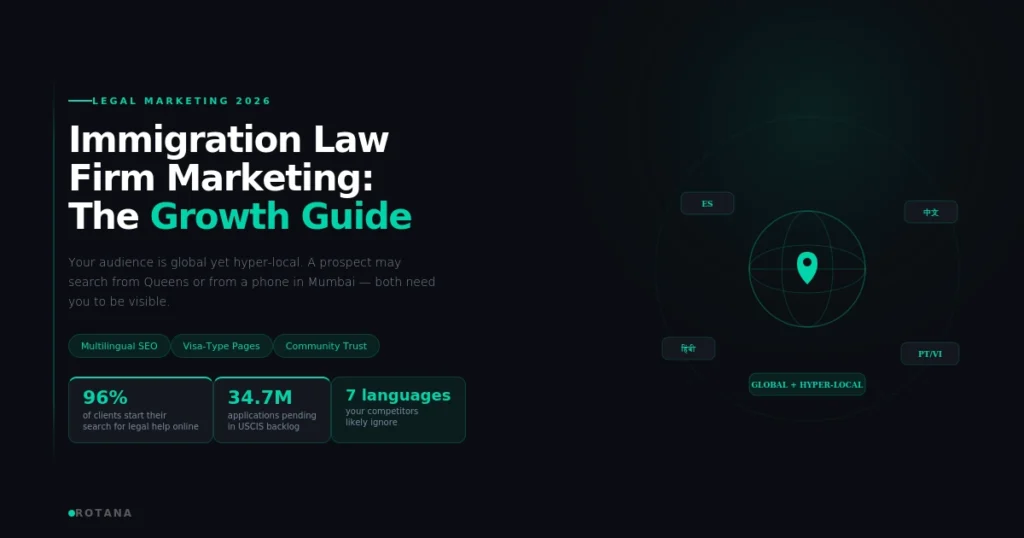
Immigration law firm marketing is the work of being found by people across many languages and many countries who need help with visas, green cards, citizenship and deportation defense, then earning enough trust to turn a frightened search into a booked consultation. It is unlike any other legal niche. Your audience is global yet hyper-local: a prospective client may be searching from an apartment in Queens or a phone in Mumbai. The matter is emotional and often urgent, the client is frequently unfamiliar with the U.S. system and a large share of high-intent searches happen in a language other than English. 96% of clients begin their search for legal help online, so visibility is the whole game.
I run an SEO-led growth agency, so I know why some immigration firms stay booked while others rely on a thinning stream of referrals. The firms that win combine visibility with clarity, multilingual readiness and fast, respectful response. This guide covers the full system: the dual-geography model that defines this niche, multilingual content as a competitive moat, the visa-type architecture that actually ranks, community trust signals, urgency-driven intake, the ethics you must respect and the metric that matters.
The dual-geography model
Global yet hyper-local
Immigration is one of the few legal niches where your market is both international and intensely neighborhood-level. Some clients are already in your city searching “immigration lawyer near me.” Others are still abroad, researching pathways months before they choose anyone. These two audiences need different content. Local searchers convert quickly and want proof you are nearby, available and trusted. International researchers want educational depth and reassurance across a longer decision journey. A firm that builds for only one of these leaves the other to competitors.
Build for both reach and proximity
Serve the global side with location-neutral, deeply educational pages on visa pathways and processes that rank for research queries regardless of geography. Serve the local side with a strong Google Business Profile, city pages and neighborhood targeting. The most sophisticated firms go down to ethnic centers, optimizing for terms like “immigration lawyer in Chinatown” or citizenship help in a specific community. Both layers compound, since a person who first found your educational guide from abroad may later search your name locally once they arrive.
Multilingual content is your moat

Why language is the advantage
A significant portion of immigration clients search in Spanish, Mandarin, Portuguese, Vietnamese, Arabic, Hindi and Tagalog. Most firms ignore this, which makes it the single biggest underserved opportunity in the niche. A Spanish-speaking prospect searching “abogado de inmigración” or “defensa contra deportación” will choose the firm that meets them in their language. Building genuine multilingual visibility puts you in front of high-intent searches your English-only competitors never see. This is a durable moat, since it compounds while rivals stay monolingual.
Do it properly, not with a translation tool
Multilingual content does not mean running English copy through machine translation. It means culturally accurate, professionally written content in each target language, with proper hreflang tags that tell Google which version to serve which audience. Optimize your Google Business Profile in relevant languages, signal which languages your team speaks and build cultural-relevance cues that earn trust with specific communities. Clients can tell the difference between a firm that genuinely serves their community and one that pasted in a translation, so invest in doing it well.
The visa-type architecture that ranks
One thorough page per visa type
Pages focused on specific visa types consistently outperform generic “immigration lawyer” pages. Build one thorough page for each major category you handle: family-based petitions, employment visas like H-1B, L-1, O-1 and EB-5, asylum, naturalization and citizenship, DACA, removal and deportation defense, waivers and adjustment of status. Each page should cover eligibility, required documents, process steps, timelines and FAQs, then link to related visas and supporting guides. A thin 350-word page cannot compete with a competitor publishing a 2,000-word resource on the same visa. Depth wins here.
Structure it as a hub and spoke
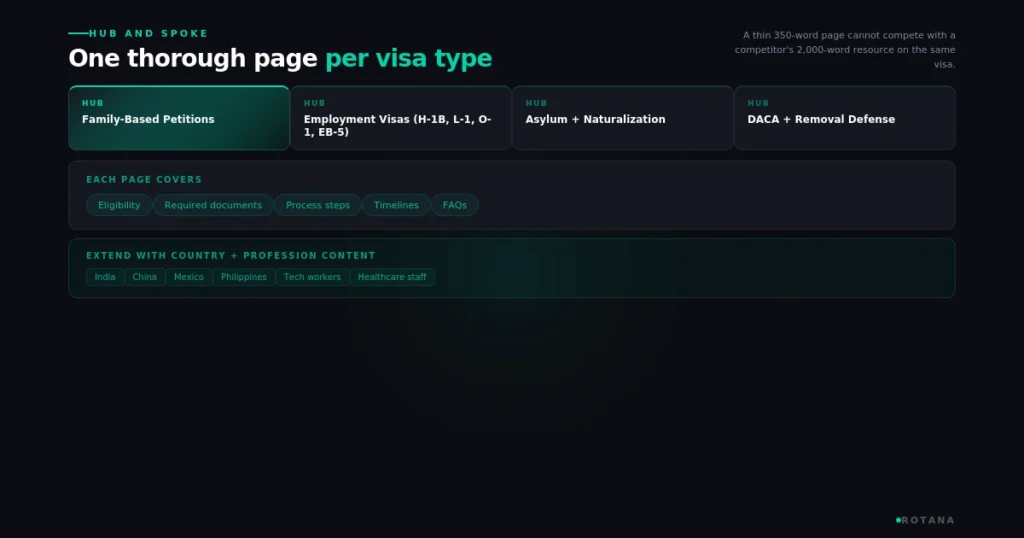
Organize these pages into clusters: a hub page for each major category linking to spoke pages on specific visas and sub-questions. This structure helps prospective clients navigate a complex topic and signals topical authority to Google. Country and profession-specific content extends it further, with guides for high-volume countries like India, China, Mexico and the Philippines and for professions like tech workers or healthcare staff. This architecture is the durable organic engine and it is the work I focus on through our SEO consultancy service.
Trust and community signals
Show credibility clearly
Immigration clients need to believe your firm can actually help before they reach out, often while anxious about their status. Build trust with detailed attorney bios listing bar admissions, education and specific immigration experience, clearly stated professional memberships like AILA, an explanation of your process and what a client can expect and authentic testimonials permitted under bar rules. Because immigration involves people’s futures, your content should reflect that weight with accuracy, citing primary sources like USCIS where relevant. Google’s E-E-A-T guidelines reward exactly this kind of demonstrated expertise and trustworthiness.
Build citations the niche rewards
Local citations and consistent name, address and phone information across legal directories signal authority. List your firm on Justia, Avvo, FindLaw, Lawyers.com and Martindale-Hubbell, plus your state bar and AILA. The move most firms miss is the community layer: ethnic chambers of commerce, cultural centers, immigrant advocacy organizations and community-based groups. Links and citations from these carry real weight in Google’s local algorithm and signal a genuine connection to the communities you serve. This community channel is distinctive to immigration and worth pursuing deliberately.
Paid search and urgency-driven intake

Capture time-sensitive demand
Many immigration matters are time-sensitive, especially work authorization, visa deadlines and removal defense. Paid search and Local Service Ads put your firm in front of people who already know they need help and need it fast. Ad copy that emphasizes language access, consultation options and quick response performs best. Google Ads captures active searchers, while Meta extends reach and retargeting. Paid channels deliver leads within weeks, which complements the slower build of SEO. The USCIS backlog adds urgency, with over 34.7 million applications pending and employment green-card processing averaging more than a year, so prospective clients feel real pressure to act.
Respond fast and respectfully
Visibility means nothing if intake is slow or cold. Immigration clients are anxious and will contact the next firm if yours does not respond. Answer quickly, in the client’s language where possible and with cultural sensitivity. The first contact sets the tone for a relationship that may span years and multiple cases. A fast, warm, multilingual intake converts far more of the leads your marketing works hard to generate.
Respect the ethics rules
Immigration marketing operates under state bar advertising rules and the added concern of unauthorized practice of law. Focus on accuracy and transparency. Avoid guaranteeing outcomes or making misleading claims, describe your services clearly and keep messaging culturally respectful rather than fear-based. Present testimonials only as permitted in your jurisdiction. Because immigration policy shifts often, keep content current, since outdated process or timeline information erodes the trust you worked to build. When in doubt, have counsel review campaigns against your state’s rules.
Measure consultations, not traffic
Rankings and traffic are not the goal. Booked consultations from qualified prospects are. Track consultation requests from organic search and paid channels, lead quality by case type and potential case value and which languages and visa categories produce your best matters. Many immigration firms invest 5% to 10% of revenue in marketing, with SEO and content taking four to six months to gain traction while paid search produces leads sooner. Sustainable growth comes from layering paid for the short term over SEO for the long term, then tracking which channels and which languages bring the cases you actually want.
What I would do first
If you run an immigration firm and want more qualified consultations, start in this order. Optimize your Google Business Profile with the “Immigration Attorney” category and consistent citations, then build a steady, compliant review habit. Build deep pages for each visa type you handle, structured as hubs and spokes. Add genuine multilingual content for the communities you serve, done professionally. Build community citations from ethnic chambers and advocacy groups. Launch Google Ads and Local Service Ads for urgent, time-sensitive matters. Fix intake so every inquiry gets a fast, respectful, in-language response. Then measure consultations, not traffic.
Immigration marketing rewards the firm that is visible across languages and geographies, demonstrably trustworthy and fast to respond with respect. The system beats the budget. If you want that system built and tuned to the communities you serve, that is the work I do at Rotana. The same care drives my guides to family law marketing and email marketing for lawyers. Book a call through the link on the site.
Frequently asked questions
What is the best marketing strategy for immigration law firms?
The strongest approach combines deep visa-type pages for organic search, genuine multilingual content for the communities you serve and a strong local presence through an optimized Google Business Profile and community citations, with Google Ads and Local Service Ads for urgent matters. Because immigration clients are global yet hyper-local, the strategy must serve both international researchers and local searchers. No single tactic wins. The firms that grow run these as one system and respond to inquiries fast, in the client’s language, with cultural respect.
Why is multilingual SEO so important for immigration lawyers?
A large share of immigration clients search in languages other than English, including Spanish, Mandarin, Portuguese, Vietnamese, Arabic and Hindi. Most firms ignore this, which makes multilingual visibility the single biggest underserved opportunity in the niche. A prospect searching “abogado de inmigración” will choose the firm that meets them in their language. Done properly, with professional translation and hreflang tags rather than machine translation, multilingual content reaches high-intent searches that English-only competitors never see and it compounds into a durable advantage.
How should an immigration law firm structure its website content?
Build one thorough page per visa type you handle, such as family-based petitions, employment visas, asylum, naturalization, DACA, removal defense and waivers. Each page should cover eligibility, required documents, process steps, timelines and FAQs, then link to related visas. Organize these into hub-and-spoke clusters that signal topical authority. Thin pages of a few hundred words cannot compete with competitors publishing thorough 2,000-word resources, so depth and clear structure are what earn rankings and help anxious clients navigate a complex topic.
How much should immigration law firms spend on marketing?
Many immigration firms invest 5% to 10% of annual revenue in marketing, with agency engagements commonly starting around $1,500 to $5,000 a month depending on market competition. Smaller budgets usually prioritize SEO and a strong website, while larger firms add paid search, video and multilingual content. SEO and content typically take four to six months to gain traction, while paid search can generate leads within weeks, so layering both produces the most sustainable growth across short and long horizons.
What can immigration law firms not say in their marketing?
State bar advertising rules generally prohibit guaranteeing outcomes and making misleading or deceptive claims and immigration adds concern about the unauthorized practice of law. Describe your services accurately, avoid fear-based messaging and present testimonials only as your jurisdiction permits. Keep process and timeline information current, since immigration policy changes often and outdated claims erode trust. Rules vary by state, so confirm your jurisdiction’s requirements and have counsel review campaigns when you are unsure whether a claim is compliant.